
Honey
Beginners guide.
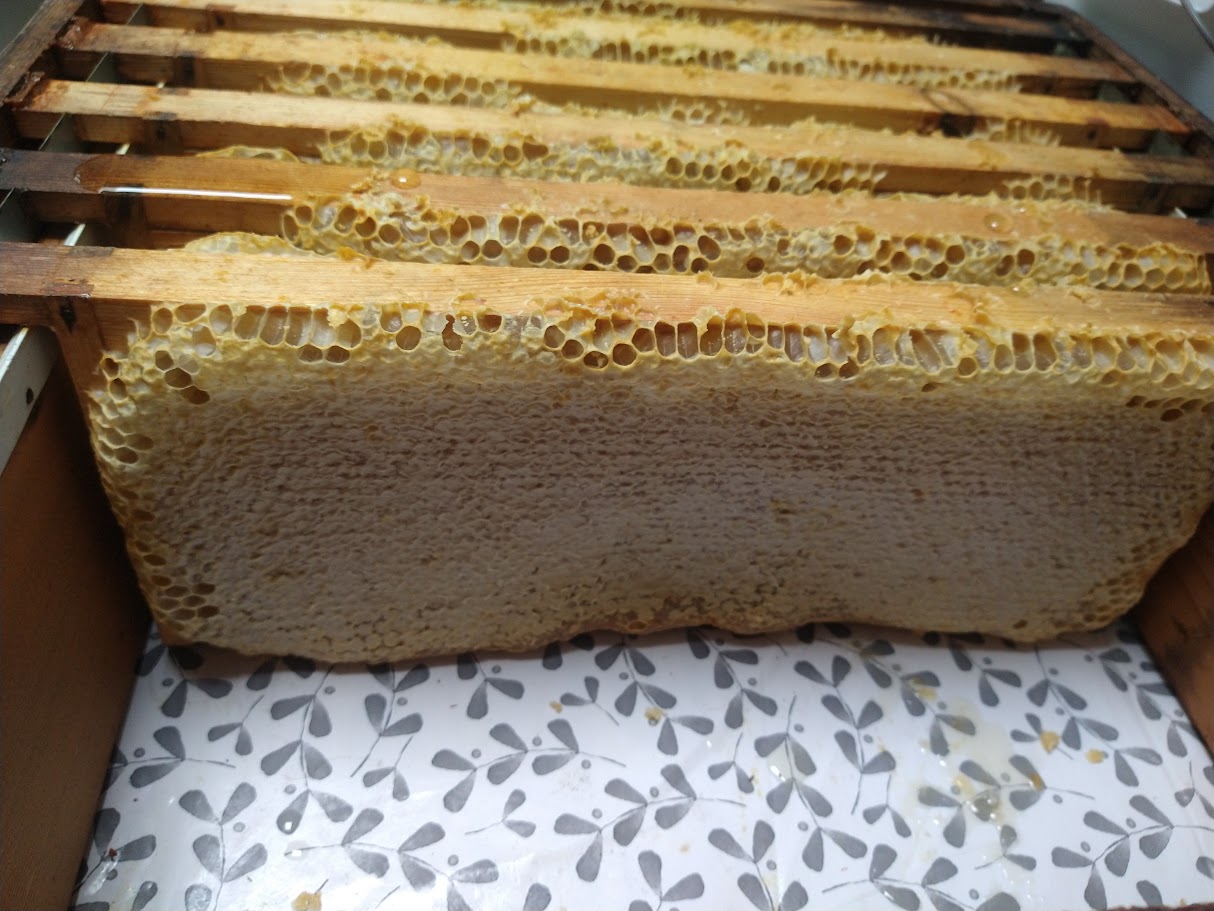
Bees store honey in their hives to act as winter fuel. As bees don’t hibernate over winter they access this honey store throughout winter. They huddle together to keep warm – using their wing muscles to heat up the hive. During December/January the Queen will stop laying eggs and the colony will maintain a temperature above 19oC but in the spring, when she starts laying eggs, then the centre of colony will be at 35oC.
As beekeepers, the colonies survival is critical to us, so we have to balance between taking honey and leaving enough stores for the colony for the winter. Most beekeepers will feed the bees syrup in the autumn so that they can top up their stores. They need 20kg of honey to maintain themselves in an average UK winter. In the depth of winter, when we cannot feed syrup as it would freeze we feed them icing fondant in a block on top of the hive under its roof.
There are two main harvests for honey in the UK – one after the Spring flowers around May and the later harvest in July/August. These can vary depending on the weather and the location of the hives. So don’t expect to buy honey all year round!
Buying Honey
Honey has different colours – light, medium and dark. The colour reflects what the bees have been foraging on. The different forage (flowers) will give different flavours and it is often a complete surprise to the beekeeper what colour each batch is.
Honey is a complex mix of carbohydrates and these will crystallise after a period of time. The rate of crystallisation is governed by many factors but one important factor is the forage. If the bees forage on Rape plants then the high glucose levels in the nectar makes the honey granulate quickly. If you want to make the honey liquid again then warming to no more than 50oC is required – putting the jar with the lid loosened in hot water, or in an oven at 50oC for a few hours. Don’t be tempted to turn the heat up as this will damage the honey – slow and low is the motto.
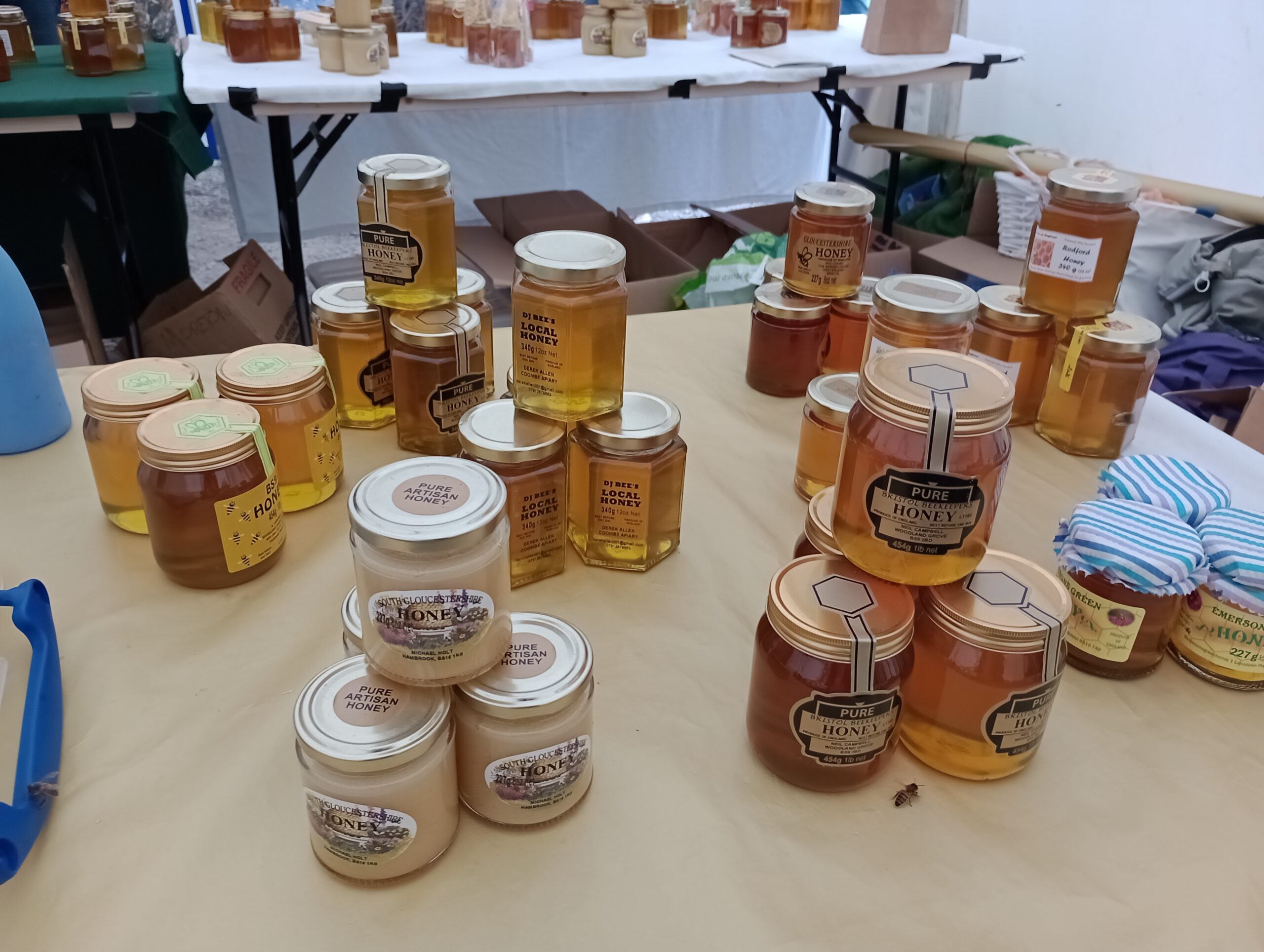
Spreading runny honey on your toast is tricky and some people prefer crystallised honey. Naturally crystallised honey will have crystals of varying size, which is less than ideal and can be rock solid. Creamed honey is where the runny honey has small crystals of honey added and this causes it to have small crystals – much more palatable and easy to spread. The honey on the front left of the photo demonstrates this.
Honey is sold in various sizes – most jars are imperial sizes just to confuse people – 1lb (454g), 12oz (340g), 8oz (227g). In the photograph the round jars on the front row with the black labels are 1lb whilst the hexagonal are ones are 12oz.
The price of honey varies depending on the beekeeper but you will pay more than supermarket prices. Expect to pay between £8 and £10 per lb if you buy direct and if you buy from a shop this can be more (and if you buy from Kew Gardens alot more!).
The Club apiary produces honey that we sell to fund running costs for the club.
We sell this honey at various events:
Local fayres eg Sea Mills flower show
If you are running an event and want us to provide information about beekeeping and sell honey then please contact our Secretary.
Donate to Bristol Beekeepers Charity
Proudly powered by WordPress